The answer is simpler than it seems. It comes down to one question about the person wearing it: can they stand up, even briefly, or does changing happen while they lie in bed? Everything in this guide follows from that.
Tape Diapers vs Pull-Up Pants: Which Does Your Patient Need?
LifeCare Care Team 8 min read

The answer comes down to one question about the patient, not the product.
Key takeaways
- Tape diapers are for bedridden and limited-mobility users changed by a caregiver. They open flat and refasten at the sides.
- Pull-up pants are for ambulatory users who manage their own care. They wear and remove like regular underwear.
- When in doubt, start with tape diapers. A tape diaper can always be used on a mobile person; a pull-up cannot be safely used on a bedridden one.
- Size matters as much as format. Both are sized by waist measurement in centimetres at navel height, not by body weight.
- Switching formats as the patient's condition changes is normal and expected.
What is a tape-style adult diaper?
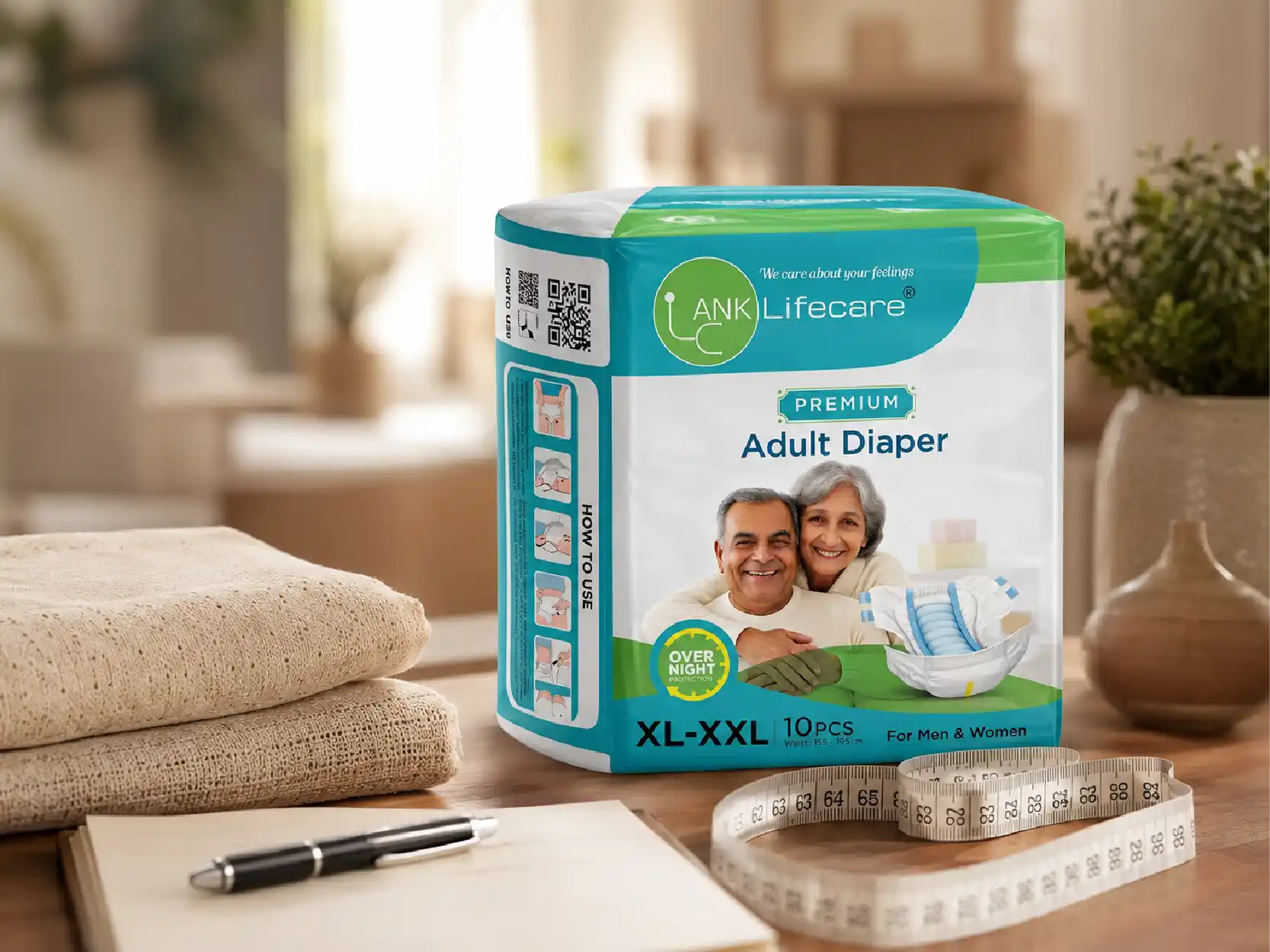
A tape-style adult diaper is a flat absorbent pad with adhesive side tapes that fasten across the front panel. The caregiver unfolds it flat, positions it under the person, and fastens the tapes on both sides at hip level. The tapes are refastenable: the caregiver can open and re-close them to check the pad level or adjust the fit without wasting the product.
Who it is designed for: adults who are bedridden, have severely limited mobility, are post-stroke or post-surgery and cannot stand safely, or have advanced dementia where self-care is not possible.
How it is used: the caregiver rolls the user gently to one side, positions the diaper flat under the hips, rolls them back, and fastens the tapes at hip level. The process takes approximately two to three minutes with practice.
What is a pull-up pant?
A pull-up pant, also called a pant-style diaper, is an absorbent undergarment worn exactly like regular underwear. The user steps into it and pulls it up. Removal is done the same way, or by tearing the perforated side seams for a quick change in any restroom without removing shoes or trousers.
Who it is designed for: adults who can walk, stand independently, travel, and manage changing with little or no caregiver help.
How it is used: step in, pull up, wear. Change as needed by pulling down or tearing the sides. Most users change 3 to 4 times across a full day.
Side by side: the complete comparison
| Situation | Tape diaper | Pull-up pant |
|---|---|---|
| User is bedridden or fully dependent | Best choice | Cannot be used safely in bed |
| User can walk and stand | Workable, but awkward to change | Best choice |
| Caregiver changes the user | Easiest format for caregivers | Significantly harder in bed |
| User changes themselves | Difficult without standing | Easiest, like underwear |
| Changed at night without fully waking | Yes, tapes allow quiet repositioning | No, requires sitting or standing |
| Overnight protection for bedridden users | Excellent with correct positioning | Good for ambulatory users |
| Feels like regular innerwear | No | Yes |
| Adjustable fit after wearing | Yes, tapes reclose and readjust | No, waistband is fixed |
| Visible under thin clothing | More visible at the waist | Profile close to regular innerwear |
| Quick change in a public restroom | Not suited | Tear-away sides take under one minute |
| Post-surgery recovery (mobile patient) | Usable | Better choice |
| Post-surgery recovery (bedridden patient) | Best choice | Not suited |
Tape diapers: the full picture
Why caregivers prefer tape diapers for dependent users
When a person cannot stand or assist in changing, the pull-up format works against the caregiver. Putting on a pull-up requires the user to stand or sit upright and lift each foot through the leg openings. For a bedridden post-stroke patient or someone with advanced dementia, this is either painful, risky, or impossible.
Tape diapers solve this completely. The caregiver unrolls the diaper flat, slides it under the user during a side-roll, positions it correctly, rolls the user back, and fastens the tapes. No standing, no sitting, no lifting of legs. The entire change happens with the person in their natural resting position.
The refastenable tapes add a practical advantage that caregivers notice quickly: if the tapes are fastened slightly wrong on the first attempt, they pull off and restick without damaging the product. This is particularly useful in the early weeks of caregiving when technique is still developing.
The features that translate into real outcomes
Not all tape diapers perform equally. These are the features that matter in daily use:
Leg leak guards. Raised elastic barriers along both inner leg openings. When a user lies on their side for pressure relief, leakage travels toward the leg openings. Guards that stand upright and seal against the skin contain this. Guards that lie flat do not.
Wetness indicator. A line on the outer surface that changes colour when the core is saturated. Lets a caregiver check the pad level without disturbing the user.
Breathable backsheet. The outer layer facing the bed. A breathable material allows moisture vapour to escape while staying liquid-proof. In India's humid climate, this reduces the heat buildup that is the primary cause of diaper rash.
Superabsorbent polymer core. Converts liquid into a gel and holds it away from the skin surface. High-quality cores keep skin dry between changes; lower-quality materials allow the gel to break down and rewet the skin.
Correct size. The most important factor of all. A diaper that is too large allows leg guards to gap away from the skin. One that is too small creates pressure marks at the waist and hips. Neither feature nor brand overcomes a wrong size.
When tape diapers are the right choice
Pull-up pants: the full picture
Why independent users prefer pull-ups
For adults managing incontinence who still walk, work, travel, and live with independence, the tape diaper format creates an immediate psychological barrier. It requires assistance, looks and feels different from regular underwear, and reinforces dependence at a time when most people are working to maintain normalcy.
Pull-up pants remove this barrier. The design is functionally identical to regular underwear at the point of wearing. They sit flat under clothing without the bulk of a tape diaper. The elastic waistband moves naturally through sitting, standing, and walking. Most people around the user have no idea they are wearing incontinence protection.
The tear-away side seams are an underappreciated design choice. In a public restroom, the user removes the used product without stepping out of their footwear or pulling trousers to the floor. This makes long journeys, extended social events, and public situations manageable without planning every movement around bathroom access.
When pull-ups are the right choice
The situations where it is less clear
When mobility is somewhere in the middle
Many families face a situation where the person can stand briefly with support but cannot do so reliably or safely enough to change a pull-up. This is common in the first weeks after a stroke or major surgery.
In this situation, start with tape diapers. A tape diaper can always be used on a mobile person; the reverse is not reliably true. As mobility improves, switch to pull-ups. Switching formats as the patient's condition changes is normal and expected.
When the person uses a wheelchair
If the user can transfer to a standing position with minimal help, pull-ups remain practical. If standing transfers are not safe, or the user is in the wheelchair for most of the day, tape diapers are easier to manage.
Many wheelchair users pair tape diapers with a disposable underpad on the seat, which protects the chair and handles any side leakage during extended sitting without requiring a full clothing change.
When the user refuses tape diapers
This is a real and common situation. Some patients, particularly men who have been continent throughout their lives, resist tape diapers because of how they look and feel. If the person can physically use pull-ups, the psychological and dignity considerations are legitimate and worth respecting.
Compliance matters. The best-fitting diaper worn willingly outperforms the technically ideal product that gets removed or resisted. If the user can safely use pull-ups and strongly prefers them, use pull-ups.
What happens when you choose the wrong format
Understanding what goes wrong helps caregivers identify and correct problems quickly.
Tape diaper on an ambulatory user: the main issue is changing inconvenience. If the user can walk to a bathroom, tape diaper changes require lying on a flat surface or managing an awkward standing change. Over time this creates friction that leads to delayed changes, which raises the risk of skin irritation.
Pull-up on a bedridden user: the structural problem is that the pull-up cannot be positioned correctly in bed. It tends to bunch or sit unevenly, leaving gaps at the leg openings or a miscentred absorbent core. This is the most common reason bedridden patients experience leaks even with a high-quality product, because the problem is the format, not the brand.
Size matters as much as format
A correctly sized diaper in the wrong format will perform better than the right format in the wrong size. Both tape diapers and pull-up pants are sized by waist circumference at navel height, measured in centimetres. Body weight is not a reliable guide: two people of the same weight can differ by three sizes at the waist.
| Format | Size | Waist range |
|---|---|---|
| Tape diaper | Medium | 71 to 112 cm |
| Tape diaper | Large | 112 to 155 cm |
| Tape diaper | XL / XXL | 155 to 195 cm |
| Pull-up pant | Medium | 60 to 110 cm |
| Pull-up pant | Large | 90 to 140 cm |
| Pull-up pant | XL | Confirm with LifeCare Size Guide |
Between sizes: choose the larger size for bedridden users and the snugger size for ambulatory users. See the [LifeCare Size Guide](/adult-diaper-size-guide) for full measurement instructions, including how to measure a user who cannot stand.
Pairing with underpads: what experienced caregivers know
Whichever format you use, experienced home caregivers and professional nurses almost universally add a disposable underpad to the bedridden care routine.
An underpad is a flat absorbent pad placed under the user on the bed, chair, or wheelchair. It protects the surface during diaper changes, which is the moment of highest accident risk, and provides a secondary layer of protection overnight.
The underpad does not replace the diaper. It works alongside it. The combination is standard practice in palliative and home nursing care across Kerala. Caregivers working across multiple families consistently report that it reduces the frequency of full sheet changes and significantly simplifies the nighttime routine.
See [LifeCare Underpads](/underpads) for full product details and usage guidance.
A practical decision guide
Work through these questions in order:
Question 1: Can the user stand for 30 seconds without significant pain or fall risk? No: use tape diapers. Yes or possibly: continue to Question 2.
Question 2: Will changes be made mostly by a caregiver, or by the user themselves? Mostly by caregiver: use tape diapers. Mostly by the user: continue to Question 3.
Question 3: Does the user have strong feelings about which format they want? Yes, they prefer pull-ups: use pull-ups if it is physically safe. No preference: use the format that best fits their mobility.
Question 4: Will the user be in bed for more than half of each day? Yes: tape diapers, combined with underpads. No: pull-ups.
Summary
The choice between tape diapers and pull-up pants comes down to mobility and who manages the change, not preference or price.
Tape diapers are for bedridden and limited-mobility users changed by a caregiver. Pull-up pants are for ambulatory users who manage their own care and want protection that does not change how they live.
When in doubt: if the person is in bed more than they are upright, start with tape diapers. If they are upright more than they are in bed, start with pull-ups.
If the situation is somewhere in the middle, tape diapers give you more flexibility as the patient's condition improves or changes.
Shop LifeCare
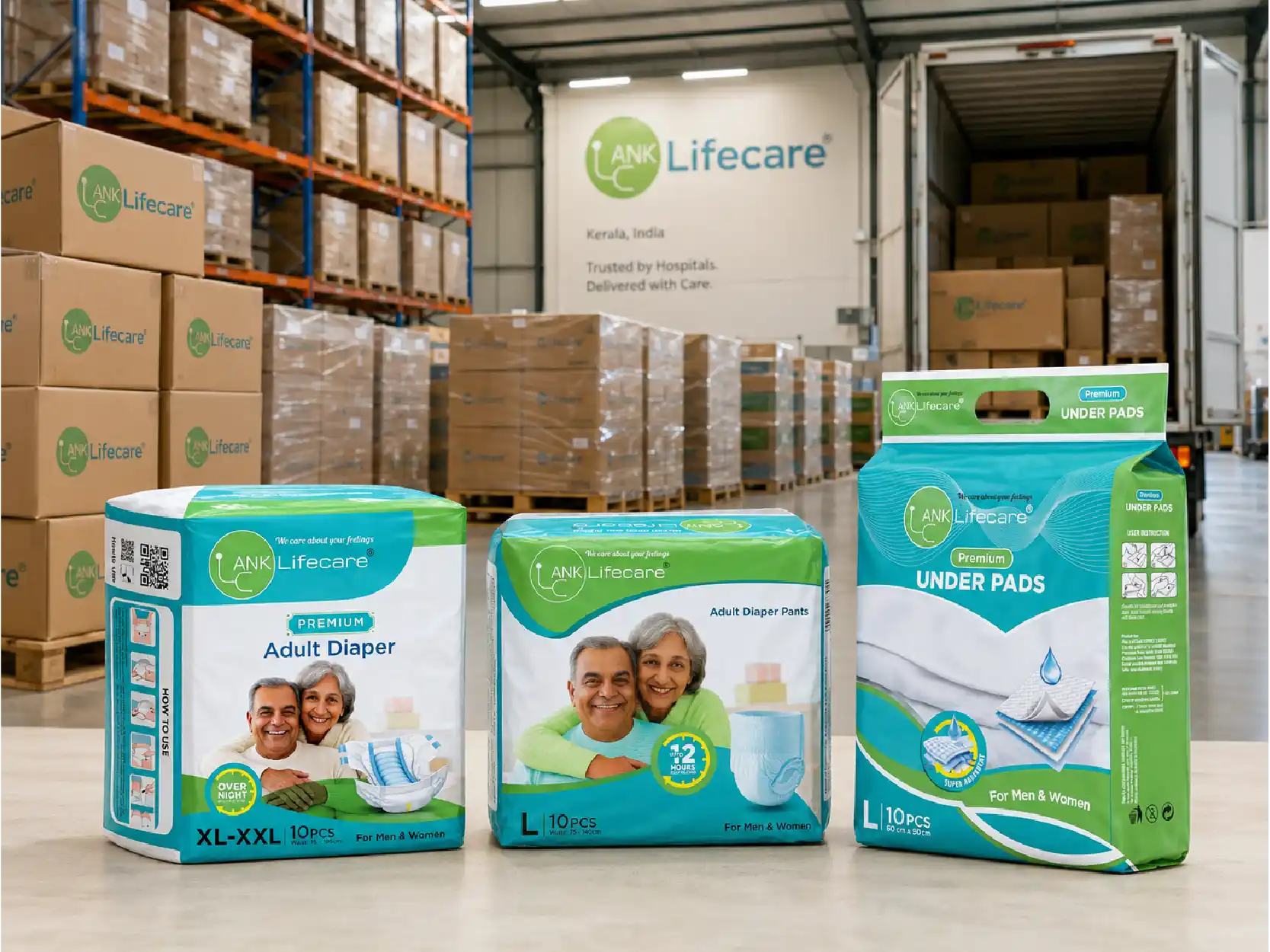
[LifeCare Adult Diapers (Tape Style)](/adult-diapers) Sizes M to XXL, fitting waist measurements from 71 to 195 cm. From Rs. 420 per pack. Delivery across India.
[LifeCare Adult Pull-Up Pants](/adult-pull-ups) Sizes M to XL. Rs. 480 per pack. Delivery across India.
Not sure about size? Use the [LifeCare Size Guide](/adult-diaper-size-guide) or send your waist measurement to our WhatsApp and we will confirm the right size before you order.
Frequently asked questions
Can I switch between tape diapers and pull-ups as the patient's condition changes? Yes, and it is common. Many families use tape diapers in the early weeks of recovery when mobility is limited, then move to pull-ups as independence returns. There is no fixed sequence, and switching is entirely normal.
Can tape diapers be worn by someone who can walk? Yes. Tape diapers are not restricted to bedridden users. An ambulatory user can wear them if they prefer the adjustable fit or the higher leak protection that comes from a correctly positioned tape diaper.
Can pull-ups be used overnight for a bedridden patient? Not reliably. A pull-up cannot be positioned correctly in bed. The core sits unevenly, the leg openings gap, and leaks are common. For overnight bedridden care, tape diapers paired with an underpad are the correct combination.
How often should either type be changed? Change immediately after any bowel movement, regardless of remaining pad capacity. For urine alone, adequate absorbency allows approximately 4 to 6 hours between changes for healthy skin. Never extend beyond the point where the wetness indicator shows saturation.
Do tape diapers cause more rashes than pull-ups? No. Rash risk is determined by how long moisture stays in contact with skin, not by the format. A tape diaper changed promptly with a barrier cream routine causes no more irritation than a pull-up used the same way.
Is one format more discreet than the other under clothing? Pull-up pants are significantly more discreet. The profile is close to regular underwear and the waistband does not create the visible outline that tape diapers can produce under thin fabrics.
Written by the LifeCare Care Team, ANK Lifecare Pvt Ltd, Kochi, Kerala. Last updated: June 2026. Have a question this guide did not answer? Call toll-free 1800-1212-665 or message us on WhatsApp.